

Small Leaks Under Sinks Become Drywall Damage Fast. Here’s Why You Can’t Wait.
February 16, 2026
No Fooling: It’s Already Time to Schedule Your Spring Cooler Changeover
April 1, 2026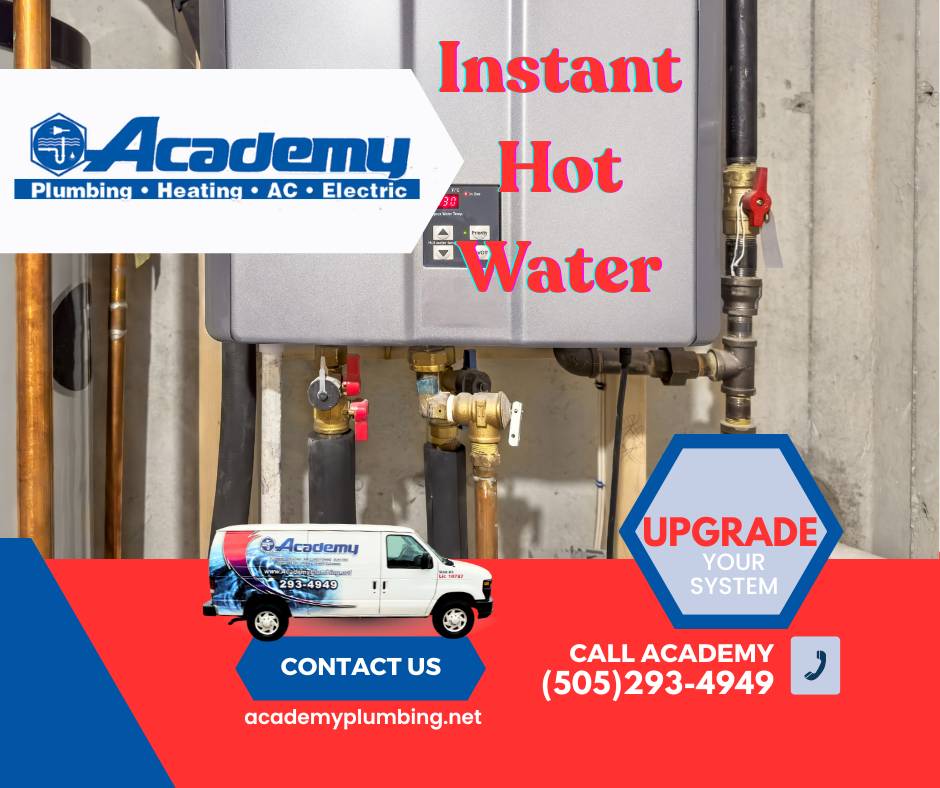
Tankless water heaters promise unlimited hot water, lower energy bills, and space savings. These promises are real, but only if your home meets specific requirements. Installing a tankless system in the wrong application creates frustration, wasted money, and performance that falls short of expectations. Before you commit to tankless technology, understand what makes a home suitable for this type of water heating.
How Tankless Water Heaters Actually Work
Traditional tank water heaters store 40 to 80 gallons of hot water, maintaining temperature through continuous heating cycles. Tankless units eliminate storage entirely. They heat water on demand as it flows through the unit, using high-powered burners or electric elements to raise temperature instantly. This fundamental difference creates both advantages and limitations. Understanding these trade-offs determines whether tankless makes sense for your household.
The Tankless Advantage: When Everything Aligns
When conditions are right, tankless water heaters deliver measurable benefits.
Unlimited hot water supply: Tank systems eventually deplete stored hot water. Run the dishwasher, washing machine, and shower simultaneously, and someone’s getting a cold surprise. Tankless units heat continuously as long as water flows, eliminating the concept of “running out.”
Energy efficiency: Tank heaters maintain temperature 24/7, even when you’re not using hot water. This standby heat loss accounts for 10 to 20 percent of your water heating costs. Tankless units only operate when you open a hot water tap, eliminating standby losses entirely.
Space savings: A tank water heater occupies 16 to 20 square feet of floor space. Tankless units mount on walls, typically measuring 28 inches tall, 20 inches wide, and 10 inches deep. For homes with limited mechanical room space, this difference matters.
Longevity: Quality tankless systems last 20 to 25 years with proper maintenance. Tank heaters typically require replacement after 10 to 15 years.
These advantages sound compelling. But they only materialize if your home meets specific criteria.
The Deal-Breakers: When Tankless Doesn’t Work
Insufficient gas supply: Gas-fired tankless units require substantial fuel input to heat water instantly. A typical residential tankless heater needs 150,000 to 200,000 BTU per hour. Your existing gas line, originally sized for a 40,000 BTU tank heater, cannot supply this demand.
Upgrading gas supply means running larger diameter pipe from your meter to the water heater location. In some cases, it means upgrading the meter itself. This infrastructure work represents significant additional expense beyond the unit itself. If your gas meter sits 100 feet from your desired heater location, the upgrade becomes impractical.
Electrical limitations: Electric tankless heaters draw enormous current. A whole-house electric tankless unit requires 100 to 150 amps at 240 volts. Most homes have 200-amp service total. Installing electric tankless often means electrical panel upgrades, dedicated circuits, and potentially service upgrades from your utility company.
The electrical work alone represents a substantial investment. For many homes, electric tankless simply isn’t feasible without comprehensive electrical system upgrades.
Simultaneous high-demand usage: Tankless units heat water at a specific flow rate. A quality residential unit might deliver 8 gallons per minute at a 70-degree temperature rise (roughly what you need in Albuquerque to heat 55-degree groundwater to 125-degree shower temperature).
Eight gallons per minute sounds generous. But consider this scenario: your teenager showers (2.5 gpm), someone starts the dishwasher (1.5 gpm), and the washing machine fills (3 gpm). You’ve just exceeded your tankless unit’s capacity. Water temperature drops, or flow decreases.
Larger families with overlapping usage patterns often need multiple tankless units or strategically placed point-of-use heaters. This eliminates the efficiency advantage entirely.
Hard water without treatment: Albuquerque’s hard water creates scale buildup inside tankless heat exchangers. The narrow passages that enable instant heating also trap mineral deposits. Without water softening, tankless units require descaling maintenance every 6 to 12 months. Skip this maintenance and your unit fails prematurely.
A whole-home water softener becomes a necessary companion investment when installing tankless in our region.
The Sweet Spot: Ideal Tankless Candidates
Certain home profiles align perfectly with tankless advantages.
Smaller households with sequential usage: One or two people rarely use multiple hot water sources simultaneously. Your 8 gpm tankless unit never approaches capacity limits. You experience genuinely unlimited hot water without the simultaneous demand challenges larger families face.
Homes with existing adequate gas infrastructure: If your home already has commercial-grade gas service or recently upgraded gas lines, installation becomes far more practical. You avoid the major infrastructure expense that makes tankless impractical for many residential applications.
New construction or major renovation: When you’re already running new gas lines, installing electrical panels, and opening walls, adding tankless-compatible infrastructure costs incrementally less. The timing aligns with construction needs rather than requiring dedicated retrofitting.
Secondary or vacation homes: Tankless units don’t maintain temperature when unused, making them ideal for properties occupied intermittently. You eliminate standby losses during weeks or months of vacancy.
Homes with water treatment systems: If you’ve already installed whole-home water softening or filtration, you’ve addressed tankless units’ primary maintenance concern. Your investment protects the tankless system while serving broader water quality goals.
Understanding Your Hot Water Profile
Before evaluating tankless suitability, understand your household’s actual hot water usage patterns. How many people live in your home? Do family members shower sequentially or simultaneously? Do you run appliances during morning routines?
Peak demand times reveal whether tankless capacity matches your needs. A family of five preparing for school and work between 6:00 and 8:00 AM creates different demands than a retired couple with flexible schedules.
Your home’s existing infrastructure matters equally. Gas line sizing, electrical panel capacity, and available installation locations all factor into feasibility and total investment required.
What About Your Home?
The tankless decision requires honest assessment of your specific situation. Usage patterns, existing infrastructure, budget, and household size all factor into whether tankless delivers actual benefits or just creates expensive complications.
Ask Academy Plumbing
We’ve installed hundreds of water heaters throughout Albuquerque since 1999. We evaluate your home’s infrastructure, calculate your hot water demand, assess your budget parameters, and recommend solutions that actually work for your situation.
Sometimes that’s tankless. Often it’s not. Our job is accurate assessment, not product pushing.
Call us at (505) 821-2922 or visit academyplumbingnm.com. We’ll evaluate your home’s candidacy for tankless technology and explain your options clearly.
When tankless is right, it’s incredible. When it’s wrong, it’s frustrating and expensive. Let’s determine which category your home falls into before you invest.
Your hot water system should match your household’s actual needs, not marketing promises. We’ll help you figure out what that means for your specific situation.